A number of international media outlets have published set reports and interviews over the past few days, detailing visits to Leavesden Studios to watch production of the Harry Potter TV series. Those include Estadão, BBC News Brasil, Fotogramas, Veronica Superguide and Radio Times.
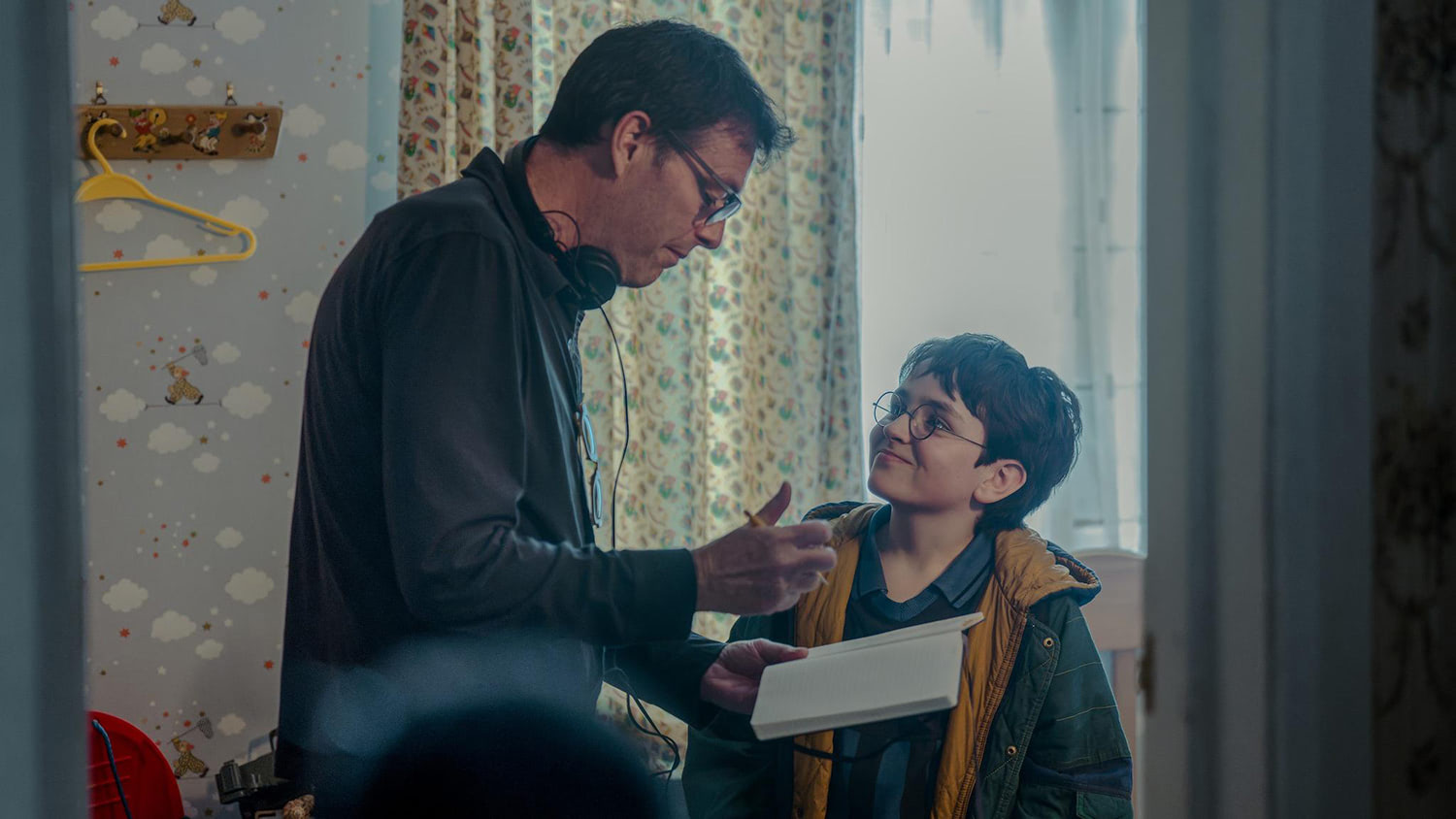
Among the plethora of coverage are brand new details about book-to-screen changes, comparisons with the film series, behind-the-scenes photography, and interviews with director Mark Mylod, cinematographer Adriano Goldman, and Nick Frost (Rubeus Hagrid). We’ve summarised the reports and new information about the production below.
The scale of the production and sets
- More than 200 shooting sets had been constructed by April 2026. Many of the Hogwarts sets, which span two enormous soundstages, are interconnected, allowing cameras to move between them in a single take. They incorporate classrooms, dormitories, corridors and common rooms.
- Staircases on the set physically move. Nick Frost (Hagrid) describes intricate details woven throughout the sets, including a tiny mouse carved into a staircase.
- Director Mark Mylod acknowledges the Great Hall pays tribute to the legacy of the film series and the detailed descriptions in the books.
- The Hogwarts library set contains more than 45,000(!) real books and features depictions of historical figures including Leonardo da Vinci, Joan of Arc and David Bowie.
- Diagon Alley comprises more than 40 shops, many of which have fully constructed interiors.
- The Hogwarts Express is a real functioning train. Approximately one kilometre of railway track was laid near Windsor for filming at Hogsmeade Station, separate from the 400-metre studio railway.
- Dumbledore’s office was being expanded to include a bedroom set for the second season, which is currently in production. The office set spans four floors.
- A set for Professor McGonagall’s office has been built.
- Production designer Mara LePere-Schloop has incorporated details from the later novels into the first season’s sets.
- Cinematographer Adriano Goldman estimates that 80–90% of the production takes place on purpose-built sets.
- One episode follows an owl through Diagon Alley, showcasing the scale of that set.
- The Forbidden Forest has been built as a living forest set with a stream and hills, and is designed to grow throughout a ten-year period.
- The production has built a real school at Leavesden Studios for the child actors, with space for up to 600 pupils.
Book changes and new scenes
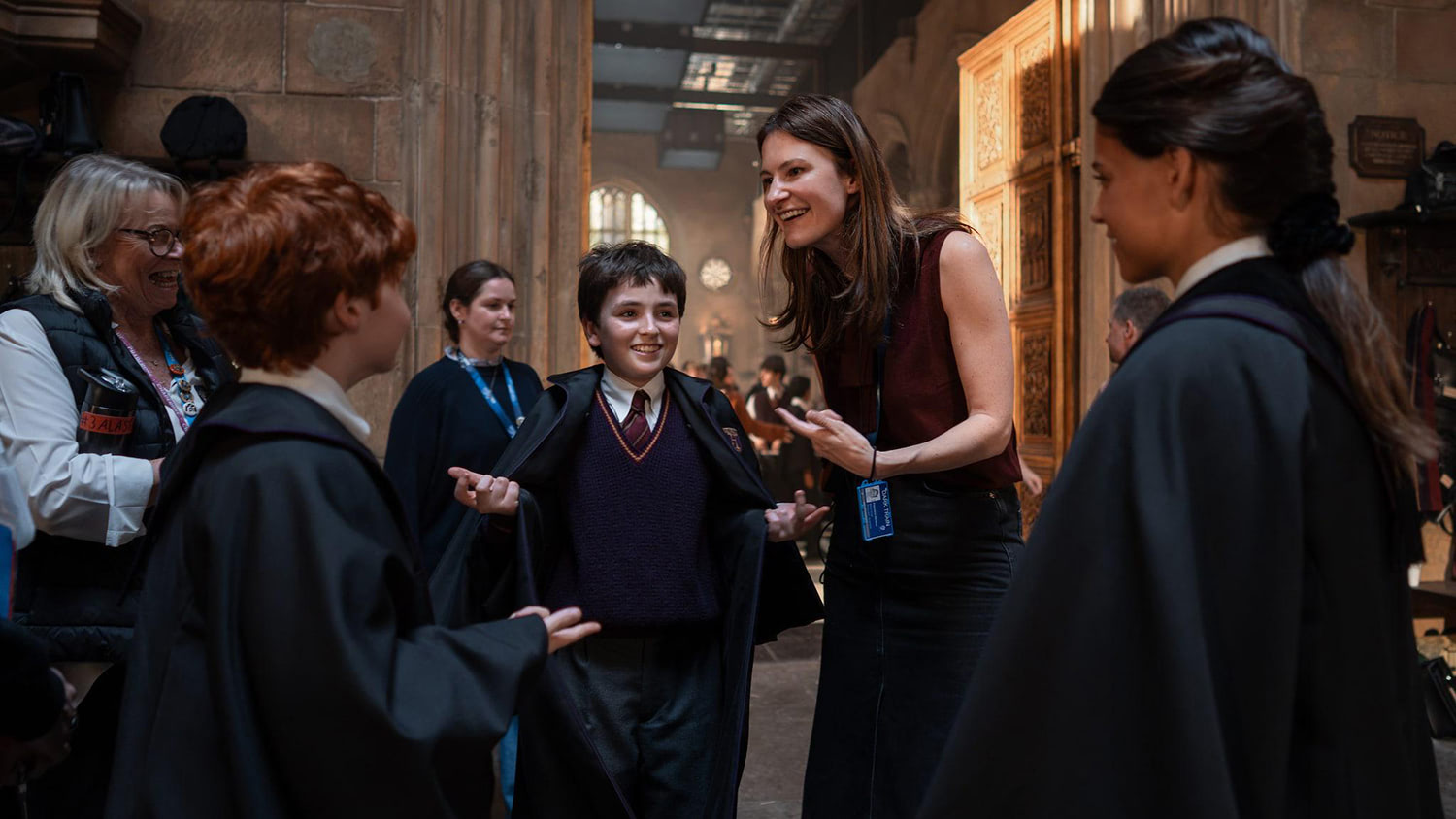
A number of scenes from the first Harry Potter book which were cut from the original film will reportedly appear in the TV show, alongside a number of entirely new scenes. These include:
- Harry and Draco’s encounter at Madam Malkin’s robe shop in Diagon Alley.
- The Sorting Hat’s song (with David Threlfall voicing the hat).
- The Dursleys reuniting with Harry at King’s Cross Station; according to director Mark Mylod, the Dursleys will have an expanded role.
- The trapdoor sequence with Snape’s potion riddle and Quirrell’s troll.
- Charlie Weasley’s friends picking up Norbert the dragon; Charlie was cast last month.
- Early appearances of both The Burrow and Malfoy Manor.
- Scenes featuring Hermione’s parents.
- A visit to Nicolas and Perenelle Flamel’s house (likely Dumbledore, as behind-the-scenes footage from last year showed Dumbledore and the Flamels in Cornwall).
- Additional interactions between Hogwarts teachers; a Great Hall clip released earlier this month gave us a great insight into this sort of ‘in-the-wings’ dialogue.
- A scene with Arabella Stanton (Hermione) on a broomstick.
- A cathedral beneath Hogwarts, the purpose of which is unknown.
Creative direction and cinematography
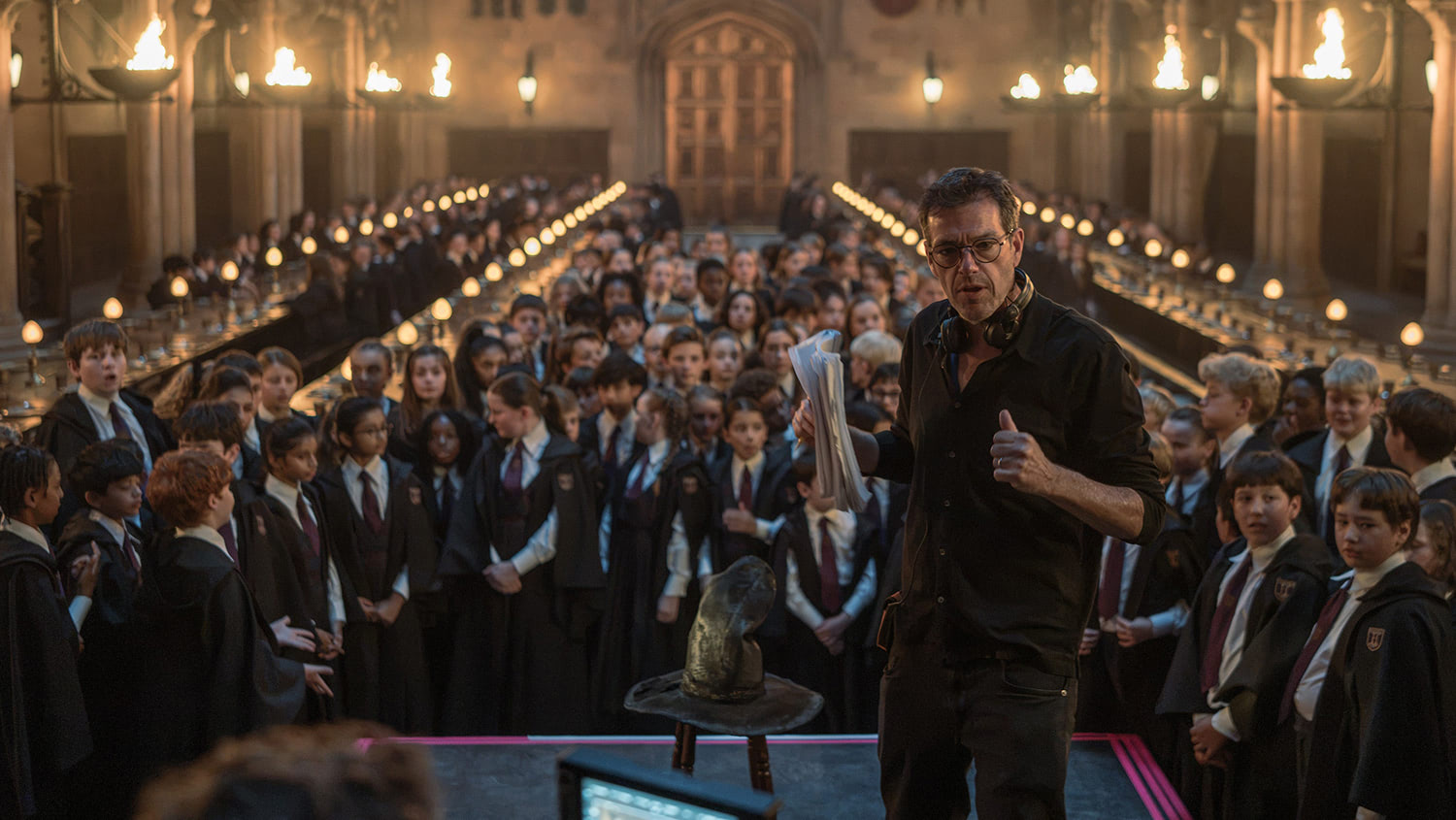
- Showrunner Francesca Gardiner wants magic to feel plausible, organic and rooted in nature. Physicist Professor Brian Cox was consulted about the natural phenomena that might underpin magic.
- Botanical motifs and natural patterns influenced the production design and redesigned Hogwarts emblem.
- Wizards will use the aurora borealis to communicate, an example of magic extending into the narrative itself.
- Some production suppliers from the film series returned, allowing the designers to reuse moulds from the films.
- Cinematographer Adriano Goldman used cooler lighting for Harry’s scenes in the Muggle world and warmer lighting for Hogwarts and the magical world. Real flames were used to illuminate many of the sets.
- Goldman believes the first season will feature at least three Quidditch matches. Earlier this year producer David Heyman revealed an entire episode would focus on Quidditch.
Costume design
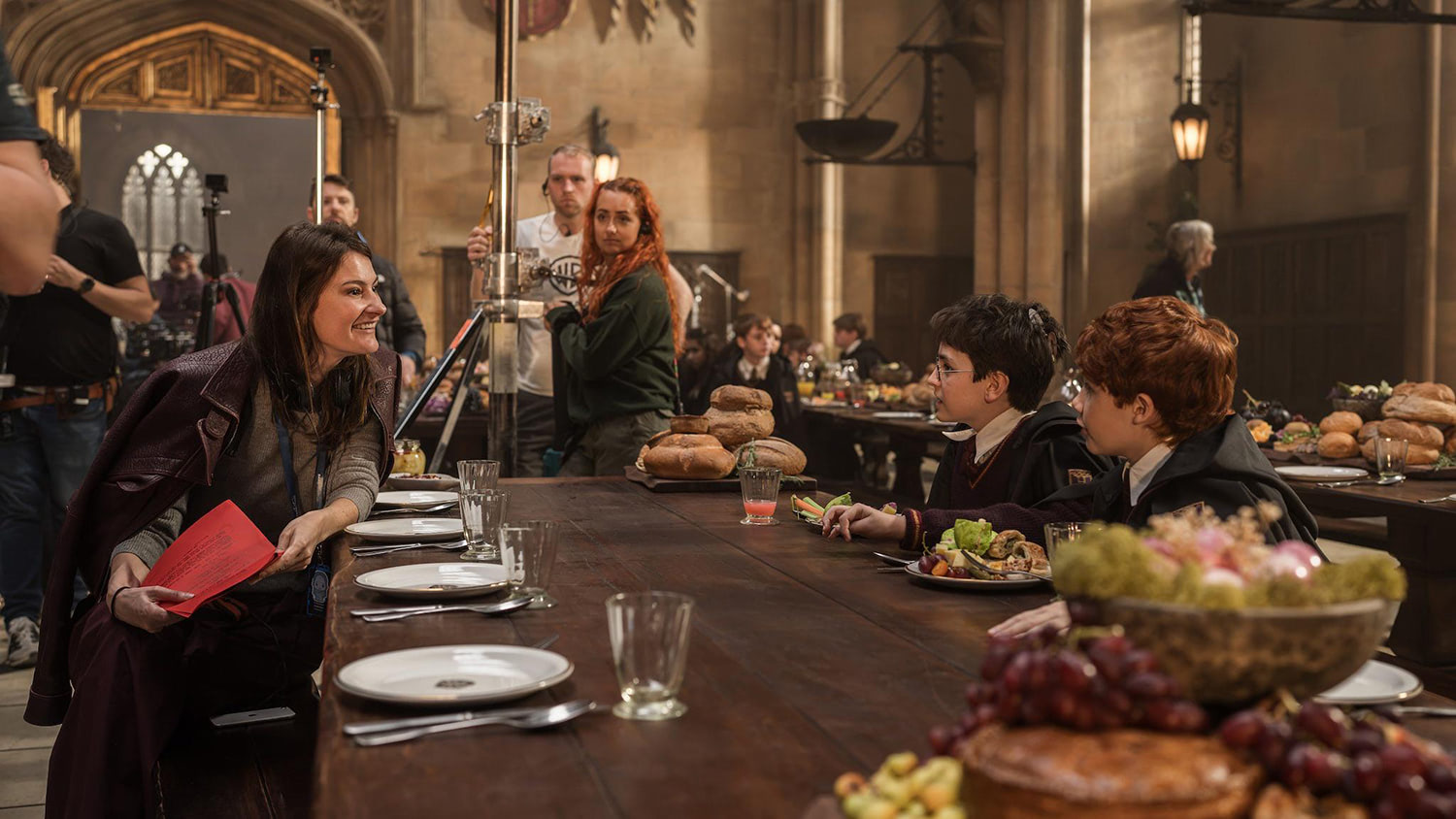
- Costume designer Holly Waddington approached the series as a period drama set in 1991; her team researched period clothing through charity shops and family photographs.
- Wizarding costumes favour eclectic styling and natural fabrics, mirroring the idea of magic being rooted in the natural world.
- The Hogwarts uniforms feature aubergine-coloured knitwear and a bespoke tartan incorporating the four house colours.
- The buttons are made from tree nuts and shells.
- Traditional pointed hats have been replaced with detachable ceremonial hoods.
- Hogwarts professors have costumes for their ‘leisure time’.
- Quidditch robes draw inspiration from motocross and fencing.
- The Sorting Hat’s design was influenced by sixteenth-century sugarloaf hats.
Magical creatures and practical effects
- Hedwig, Scabbers (incomplete with missing toe), Trevor the toad and a unicorn have all been recreated as animatronics.
- Hedwig uses gyroscopic technology to keep her head steady while perched on Harry’s arm. Mylod revealed that the puppet of a young Hedwig incorporates around 18 miniature motors and thousands of individual feathers.
- Fluffy is described as being much scarier than the film version.
- The mountain troll was developed using 3D-printing technology and measures 14 feet in length. A Spanish journalist likened the troll to creatures in Guillermo del Toro’s Pan’s Labyrinth.
- Dugbogs, Flobberworms, Fire Crabs (which really do shoot flames from their backsides) and Streelers (giant colour-changing magical snails) will all feature.
- Flutterby plants have been created using animatronics.
Nick Frost on playing Hagrid
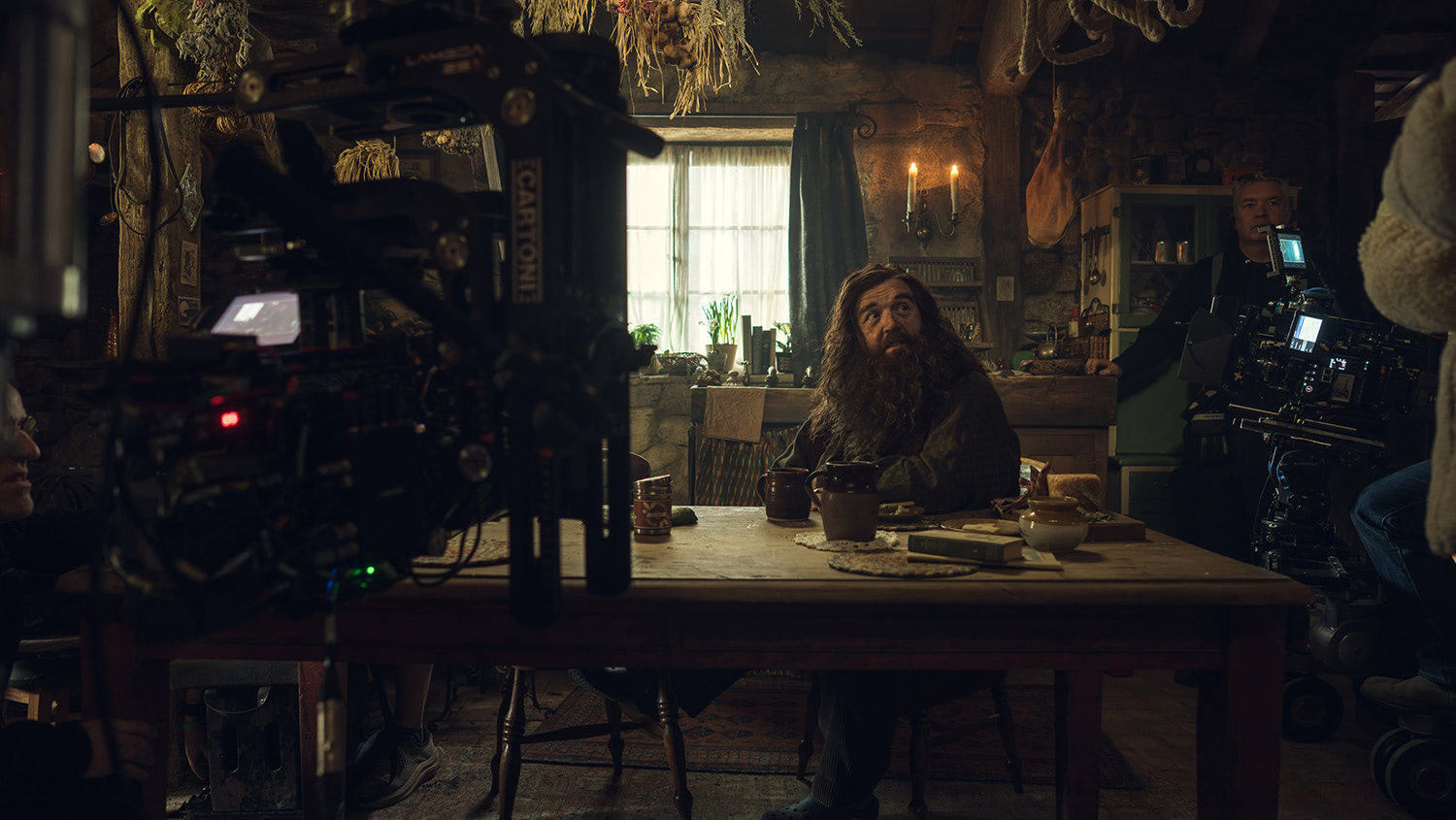
Actor Nick Frost has given a number of new interviews about playing Hogwarts gamekeeper Rubeus Hagrid, including a detailed profile on the official Harry Potter website.
- Frost cited John Coffey from The Green Mile, his uncle Emy and Robbie Coltrane (Hagrid in the films) as inspirations for his portrayal.
- His 7-foot-2-inch body double, Anthony Wallyn, wears an animatronic head and sees through a miniature camera positioned inside the head’s nose. Rugby player Martin Bayfield was Coltrane’s body double in the film series.
- Multiple puppeteers control the movements of the animatronic face.
- Hagrid’s coat weighs approximately 23 kg.
- Frost keeps personal mementos in the coat’s pockets to help him portray the character, and has been given permission to improvise dialogue.
- The artist responsible for sculpting Hagrid’s skin texture in the films returned to do the same for the series.
- Robbie Coltrane’s family gave their approval to Frost.
That’s a lot of new information for one day! You can browse the full set of promotional and behind-the-scenes photographs over on our TV show page. The first episode of the Harry Potter TV series airs on Christmas Day.